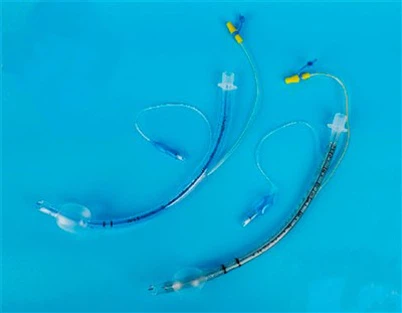
Nasal Rae Intubation
Nasal Rae intubation is a specific technique used to secure an airway by inserting an endotracheal tube through the nasal passages. It is named after the design of the specific type of tube used, called the Nasal Rae tube.
Description
Products Description
Nasal Rae intubation is a specific technique used to secure an airway by inserting an endotracheal tube through the nasal passages. It is named after the design of the specific type of tube used, called the Nasal Rae tube.

Steps
1) Patient Preparation: Position the patient in the appropriate head and neck alignment, typically in a sniffing position, which optimizes the alignment of the oropharyngeal and nasopharyngeal axes. Administer local anesthesia to the nasal passages with a vasoconstrictor if necessary.
2) Tube Selection: Choose the appropriately sized Nasal Rae tube based on the patient's age, size, and clinical needs. The Nasal Rae tube has a nasal portion that enters through the nostrils and an oral portion that extends into the oropharynx.
3) Lubrication: Apply a water-based lubricant to the nasal portion of the Nasal Rae tube to facilitate smooth insertion and minimize discomfort for the patient.
4) Insertion: Insert the nasal portion of the tube gently through one nostril while advancing it along the inferior meatus of the nasal passage. Use a twisting motion or slight rotation as you advance to navigate the natural anatomy of the nose.
5) Nasopharynx and Oropharynx: Once the nasal portion of the tube has reached the nasopharynx, guide the oral portion (Rae) along the posterior oropharyngeal wall towards the laryngeal opening. Visualize and ensure proper alignment to avoid the tube entering the esophagus or other incorrect anatomical structures.
6) Confirmation and Securing: Confirm correct tube placement by observing bilateral chest excursion and auscultating breath sounds over both lung fields. Inflate the cuff, if present, to seal the trachea and prevent air leakage. Secure the tube in place with appropriate fixation techniques, such as tape or adhesive devices.
7) Monitoring and Care: Continuously monitor the patient's oxygen saturation, end-tidal carbon dioxide levels (using capnography), vital signs, and auscultation of lung sounds. Regularly assess and document the position of the nasal Rae tube, cuff pressure, and any signs of airway or respiratory compromise.
Product Specifications
|
Endotracheal Tube (Preformed Nasal Use) |
|||
|
Cuffed |
Uncuffed |
||
|
Model No |
Size (Fr) |
Model No |
Size (Fr) |
|
PET-25NC |
2.5 |
PET-25N |
2.5 |
|
PET-30NC |
3.0 |
PET-30N |
3.0 |
|
PET-35NC |
3.5 |
PET-35N |
3.5 |
|
PET-40NC |
4.0 |
PET-40N |
4.0 |
|
PET-45NC |
4.5 |
PET-45N |
4.5 |
|
PET-50NC |
5.0 |
PET-50N |
5.0 |
|
PET-55NC |
5.5 |
PET-55N |
5.5 |
|
PET-60NC |
6.0 |
PET-60N |
6.0 |
|
PET-65NC |
6.5 |
PET-65N |
6.5 |
|
PET-70NC |
7.0 |
PET-70N |
7.0 |
|
PET-75NC |
7.5 |
PET-75N |
7.5 |
|
PET-80NC |
8.0 |
PET-80N |
8.0 |
|
PET-85NC |
8.5 |
PET-85N |
8.5 |
|
PET-90NC |
9.0 |
PET-90N |
9.0 |
|
PET-95NC |
9.5 |
PET-95N |
9.5 |
|
PET-100NC |
10 |
PET-100N |
10 |
Hot Tags: nasal rae intubation, China nasal rae intubation manufacturers, suppliers, factory
Send Inquiry
You Might Also Like