Flexible Endoscope Education & Technology — Part 2 Bending Section: The Flexible Joint Of An Endoscope
Leave a message
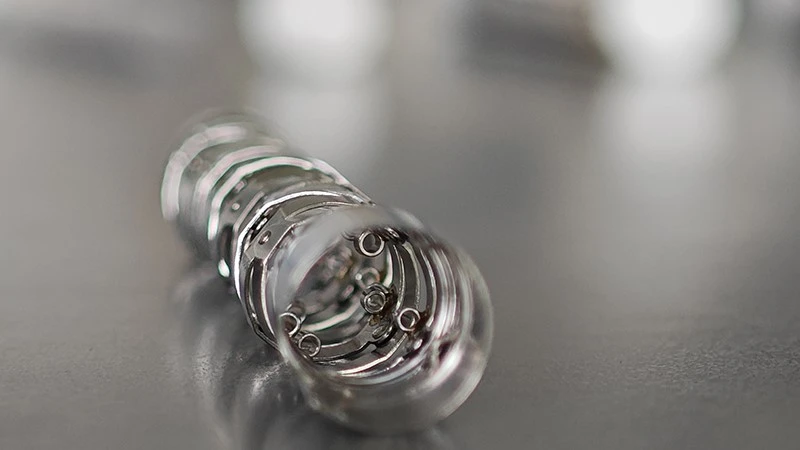
In a flexible endoscope, the bending section is one of the most important mechanical components.
It connects the distal tip with the insertion tube and allows the endoscope tip to bend in different directions. This flexibility enables physicians to navigate through complex anatomical pathways while maintaining precise control over the distal end.
But how does the bending section actually work?
1. What Is the Bending Section?
The bending section is the articulated part located between the insertion tube and the distal tip of a flexible endoscope.
Its primary function is to provide controlled angular movement.
Depending on the endoscope design, the bending section may allow:
- Up / Down movement
- Left / Right movement
- Multi-directional bending
- Precise tip positioning
The bending section must be flexible enough to achieve a large bending angle while remaining mechanically stable during operation.
2. What Is Inside the Bending Section?
Although the bending section looks relatively simple from the outside, it contains several carefully matched components.
A typical bending section assembly may include:
Bending Mesh
Provides the mechanical framework and supports the bending structure.
Bending Rubber
Covers and protects the internal components while maintaining flexibility and sealing.
Angulation Wires
Transmit movement from the control mechanism to the distal tip.
Coil Pipe / Coil Assembly
Provides controlled support for the wires and helps maintain smooth wire movement during bending.
Distal Tip Components
Connect the bending mechanism with the optical and working components at the tip.
The performance of the entire bending system depends on how accurately these components work together.
3. How Does Bending Work?
The bending mechanism is based on tension and controlled movement.
When the operator moves the angulation control, the corresponding wire is pulled.
This movement transfers force through the insertion tube to the bending section.
The bending section then changes its shape, directing the distal tip toward the desired position.
In simplified terms:
Control Knob → Angulation Mechanism → Wire → Bending Section → Distal Tip
This seemingly simple movement requires precise control because even small changes in wire tension can affect the response of the distal tip.
4. Why Is the Bending Section So Important?
The bending section directly affects the endoscope's maneuverability.
A well-designed bending system should provide:
Smooth Angulation
The distal tip should move smoothly without excessive resistance.
Precise Response
The tip should respond predictably to the operator's control movements.
Mechanical Stability
The bending section should maintain its position without unwanted movement.
Flexibility
The section needs to bend repeatedly without excessive deformation or fatigue.
Durability
Repeated bending cycles should not quickly damage the internal structure or outer covering.
For endoscope repair companies, these characteristics are especially important when selecting replacement components.
5. Bending Mesh vs. Bending Rubber
These two components are often used together but perform very different functions.
Bending Mesh
The bending mesh is primarily a structural component.
It helps form the articulated bending section and supports controlled movement between the individual segments.
Its dimensions, material properties, and construction can influence the bending characteristics of the entire assembly.
Bending Rubber
The bending rubber is the flexible outer covering.
It protects the internal mechanism from external contamination and helps maintain the flexibility and sealing of the bending section.
Therefore:
Bending Mesh = Internal Mechanical Structure
Bending Rubber = Flexible Protective Cover
Both components need to be properly matched to achieve reliable bending performance.
6. Common Problems in the Bending Section
The bending section is exposed to repeated mechanical movement during every procedure.
Over time, several problems may occur:
- Bending rubber wear or damage
- Reduced bending flexibility
- Excessive angulation resistance
- Damaged or stretched angulation wires
- Deformation of the bending structure
- Leakage caused by damage to the outer covering
- Reduced responsiveness of the distal tip
These problems can affect both the maneuverability and service life of the endoscope.
For this reason, the bending section is also an important area during endoscope inspection and repair.
7. What Should Be Considered When Replacing a Bending Section?
Replacement components should not be selected based only on appearance.
Important factors include:
Dimensions
The component must match the corresponding endoscope configuration.
Bending Characteristics
The replacement should provide appropriate flexibility and angulation response.
Wire Compatibility
Angulation wires and their supporting structures need to work together correctly.
Material Quality
Materials must withstand repeated bending and mechanical stress.
Assembly Accuracy
Even small dimensional differences can affect the final bending performance.
For repair professionals, component compatibility and assembly precision are therefore critical.
8. A Closer Look at the Bending System
The bending section demonstrates an important principle in flexible endoscope engineering:
▌Small mechanical components can have a major impact on the performance of the complete endoscope.
The bending mesh, rubber, wires, and supporting components may appear simple individually, but their interaction determines how accurately the distal tip responds to the operator.
Understanding this relationship is essential for both endoscope design and endoscope repair.
9. From Bending Section to the Next Component
The bending section does not work independently.
It is closely connected with the insertion tube, which provides the pathway for the internal components and transfers mechanical forces between the control section and distal end.
In the next article, we will take a closer look at another important part of flexible endoscope construction:
Part 3 - Insertion Tube
Structure, Materials, Functions & Key Considerations
About Surgica Supply
At Surgica Supply, we provide components for flexible endoscope repair and maintenance, including Bending Section, Bending Mesh, Bending Rubber, Coil Pipe & Assembly, Wire & Assembly, and other flexible endoscope components.
For repair companies and professional buyers, component compatibility, dimensional accuracy, and consistent quality are key considerations when selecting replacement parts.
Explore our Flexible Endoscope Components and contact us for your specific requirements.