Flexible Endoscope Education And Technology — Part 3 Insertion Tube: The Flexible Pathway Inside An Endoscope
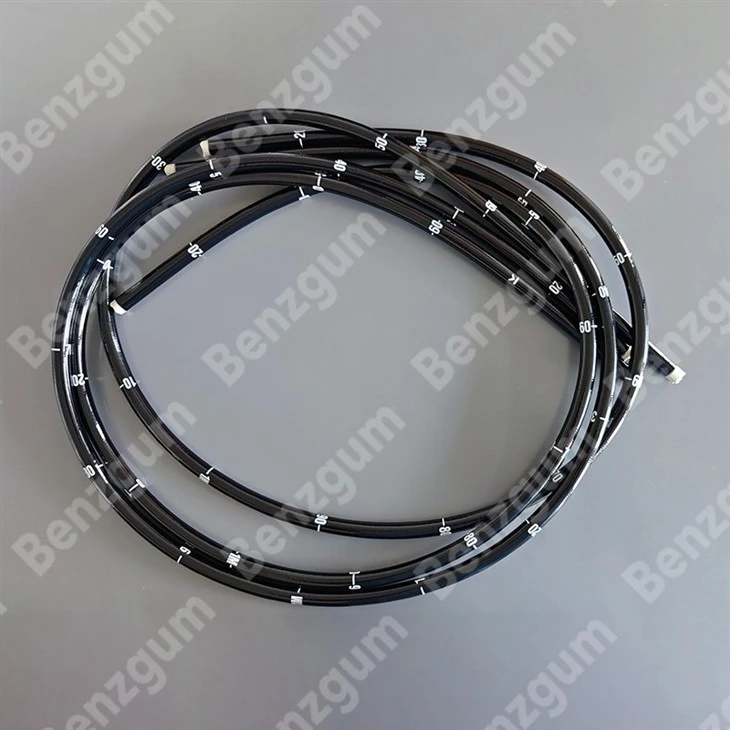
When we look at a flexible endoscope, the insertion tube may appear to be nothing more than a long, flexible shaft.
In reality, it is one of the most carefully engineered parts of the entire endoscope.
The insertion tube needs to be flexible enough to navigate through complex anatomical pathways, yet strong enough to protect multiple internal components during repeated use.
So, what is actually inside an insertion tube?
1. What Is an Insertion Tube?
The insertion tube is the long flexible section that connects the endoscope's control section to the distal end.
During a procedure, it is the part that is inserted into the patient's body.
Its main functions include:
- Providing a flexible pathway to the distal tip
- Protecting internal channels and components
- Transmitting mechanical forces
- Maintaining the shape and flexibility of the endoscope
- Supporting the passage of fluids, light, instruments, and other internal components
Although the insertion tube looks like a single component from the outside, it is actually a multi-layered assembly.
2. What Is Inside an Insertion Tube?
A typical flexible endoscope insertion tube contains multiple functional layers and components.
Depending on the endoscope design, these may include:
Outer Covering
Provides protection and contributes to the smooth external surface.
Bending / Support Structure
Provides mechanical support while allowing the tube to remain flexible.
Angulation Wires
Transmit movement from the control section to the bending section.

Biopsy Channel
Provides a pathway for biopsy forceps and other accessories.

Air / Water Channel
Transfers air and water toward the distal end.

Light Guide Components
Transmit illumination from the light source toward the distal tip.
Image / Signal Components
Depending on the endoscope architecture, these transmit or support the imaging system.
All of these components need to fit within a relatively small diameter.
That is one of the engineering challenges of flexible endoscope design.
3. Flexibility vs. Strength
One of the most important characteristics of an insertion tube is the balance between flexibility and mechanical strength.
If the tube is too rigid, it becomes difficult to navigate.
If it is too flexible, it may not provide sufficient support or control during insertion.
Therefore, the insertion tube needs to achieve a carefully controlled balance:
Flexibility + Strength + Dimensional Stability
This balance directly affects handling and maneuverability during an endoscopic procedure.
4. Why Does the Insertion Tube Need Multiple Layers?
The insertion tube is exposed to continuous mechanical stress.
During use, it may experience:
- Bending
- Twisting
- Compression
- Repeated insertion and withdrawal
- Friction
- Contact with different surfaces
- Repeated cleaning and reprocessing
A single material or simple tube structure would not be sufficient to handle all of these requirements.
Instead, different materials and structural layers work together to provide:
Protection
Protecting sensitive internal components.
Flexibility
Allowing the endoscope to follow curved anatomical pathways.
Mechanical Support
Maintaining structural integrity during operation.
Surface Performance
Providing an appropriate external surface for insertion and handling.
5. The Connection Between the Insertion Tube and Bending Section
The insertion tube and bending section work as a continuous mechanical system.
The bending section provides controlled movement at the distal end, while the insertion tube carries the internal components and transfers forces between the control section and distal end.
The relationship can be simplified as:
Control Section → Insertion Tube → Bending Section → Distal Tip
A problem in one area can therefore affect the performance of the entire system.
For example, excessive resistance inside the insertion tube may affect wire movement and ultimately change the response of the bending section.
This is why replacement components need to be properly matched.
6. Common Insertion Tube Problems
Because the insertion tube is subjected to repeated mechanical stress, it can gradually deteriorate.
Common problems may include:
- Surface damage or wear
- Kinking or deformation
- Reduced flexibility
- Internal component damage
- Channel obstruction
- Leakage
- Loss of dimensional stability
- Damage caused by repeated bending or improper handling
Some damage may be visible from the outside, while other problems require further inspection or testing.
For endoscope repair professionals, identifying the actual source of the problem is an important part of the repair process.
7. When Does an Insertion Tube Need Replacement?
Replacement may be considered when the insertion tube has suffered significant structural or functional damage.
Typical considerations include:
External Damage
Cracks, severe wear, deformation, or other visible damage.
Internal Damage
Damage to channels, wires, tubes, or other internal structures.
Loss of Flexibility
The tube no longer provides the expected flexibility or handling characteristics.
Leakage
A compromised structure may affect the sealing performance of the endoscope.
Repeated Repair
In some cases, replacing the insertion tube can be more practical than repeatedly repairing individual damaged areas.
The final decision should always depend on the condition and construction of the specific endoscope.
8. What Matters When Choosing a Replacement Insertion Tube?
For repair companies and professional buyers, choosing a replacement insertion tube is not simply a matter of finding one with the same appearance.
Several parameters should be considered:
Diameter
The external diameter needs to match the intended endoscope configuration.
Length
The overall length and working length need to be compatible with the original assembly.
Internal Structure
The arrangement and dimensions of internal channels and components are critical.
Flexibility
The replacement should provide appropriate flexibility and handling characteristics.
Component Compatibility
The insertion tube needs to work correctly with the bending section, wires, channels, distal components, and control section.
Assembly Accuracy
Dimensional consistency is particularly important because even small differences can affect final assembly and performance.
9. Why Insertion Tube Quality Matters
The insertion tube is more than a protective outer shaft.
It is a mechanical and functional pathway connecting many critical systems inside the endoscope.
Its design and manufacturing quality can influence:
- Maneuverability
- Bending response
- Internal component protection
- Channel performance
- Durability
- Overall repair quality
This is why insertion tube replacement requires careful attention to dimensions, materials, internal structure, and compatibility.
10. From a Simple Tube to a Complex Assembly
At first glance, an insertion tube may look like a simple flexible tube.
But once we look inside, we can see that it is actually a carefully coordinated assembly of multiple components.
A small diameter.
Multiple internal pathways.
Continuous mechanical stress.
Precise dimensional requirements.
This combination makes the insertion tube one of the key components in flexible endoscope engineering.
Understanding its structure is also essential for anyone involved in endoscope repair, maintenance, or replacement component sourcing.
What's Next?
We've now looked at the overall anatomy, bending mechanism, and insertion tube of a flexible endoscope.
But how does light travel from the light source to the distal tip?
In the next article, we'll explore another important component:
Part 4 - Light Guide
How Light Travels Through a Flexible Endoscope
About Surgica Supply
At Surgica Supply, we provide flexible endoscope components for repair, maintenance, and replacement applications, including Insertion Tubes, Bending Sections, Bending Mesh, Bending Rubber, Coil Pipe & Assembly, Wire & Assembly, Light Guide Components, and other commonly used parts.
For professional repair companies and component buyers, we focus on component compatibility, dimensional accuracy, and consistent supply.
If you are sourcing flexible endoscope components or looking for a replacement solution for a specific application, feel free to contact us.
Qiang (Abraham.Xu)
International Sales Specialist | Benzgum Medical Technology
📱 WhatsApp: +86 157 3595 7510
✉️ Email: abraham@benzgum.com
🌐 Endoscopic Instruments & Components: https://www.surgicasupply.com/endoscopic-instruments/