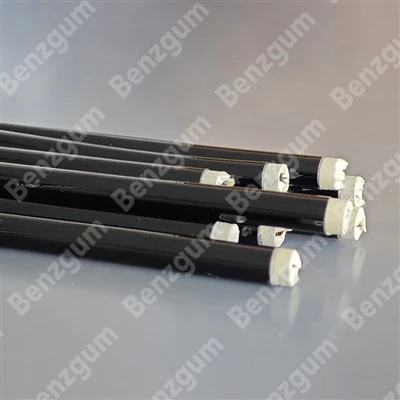
Inside The Quality Test: How Do We Evaluate A Flexible Endoscope Insertion Tube?
Leave a message
 Material Selection, Hardness Testing, Acid Resistance & Mechanical Performance
Introduction: What Makes an Insertion Tube Reliable?
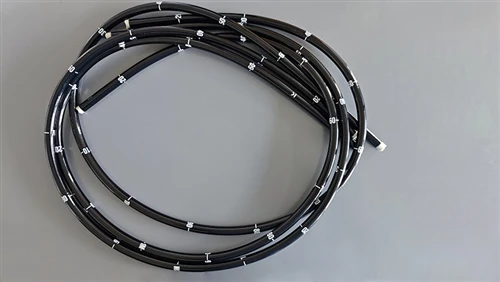
A flexible endoscope insertion tube may look like a simple flexible shaft, but its manufacturing involves multiple materials, structural layers, and precision processes.
During its service life, the insertion tube needs to withstand repeated bending, mechanical stress, friction, cleaning, and exposure to chemicals used during endoscope reprocessing.
But how can manufacturers and quality control teams evaluate whether an insertion tube meets the required performance specifications?
Is visual inspection enough?
Not really.
A more comprehensive evaluation may involve material identification, hardness testing, chemical resistance testing, dimensional measurement, and mechanical performance assessment.
In this article, we explore several important insertion tube testing methods, explain the principles behind them, and discuss why each test matters.
1. Understanding the Materials Used in an Insertion Tube
Before discussing testing methods, it is important to understand what an insertion tube is made of.
A flexible endoscope insertion tube is generally a composite structure rather than a single-material tube.
Depending on the design and manufacturer, its construction may include several components.
① Stainless Steel Spiral Tube
The spiral tube provides structural support while allowing the insertion tube to bend.
Its construction helps balance flexibility and mechanical stability.
② Braided Mesh Layer
A braided mesh is commonly positioned around the spiral tube.
It helps distribute mechanical loads and supports the overall structure.
Depending on the design, the braid may use stainless steel wires or other specified materials.
③ Outer Polymer Sheath
The outer sheath protects the internal structure and provides the external surface of the insertion tube.
Possible polymer materials include:
Thermoplastic Polyurethane (TPU)
Thermoplastic Polyester Elastomer (TPC)
Other specified thermoplastic elastomers or polymer materials
Different materials offer different combinations of flexibility, abrasion resistance, chemical resistance, and mechanical properties.
④ Internal Functional Components
The available internal space may also contain:
- Biopsy / Instrument Channel
- Air / Water Tubes
- Light Guide Components
- Angulation Wires
- Other model-specific components
The exact configuration varies between endoscope models.
Why does material selection matter?
Because different materials respond differently to mechanical stress, temperature, cleaning agents, and chemical exposure.
The quality of the final insertion tube depends not only on the individual materials but also on how they are combined.
2. Hardness Testing: Is the Outer Material Too Soft or Too Hard?
Hardness is an important property when evaluating the polymer materials used in an insertion tube.
A material that is too soft may be more susceptible to indentation or deformation, while a material that is too hard may not provide the intended flexibility.
The objective is not simply to achieve maximum hardness.
It is to achieve the appropriate material properties for the intended design.
How Does Hardness Testing Work?
One commonly used method for elastomeric materials is durometer hardness testing.
The principle is based on measuring how deeply a standardized indenter penetrates the material under a specified force.
In general:
Greater penetration indicates lower indentation hardness.
Less penetration indicates higher indentation hardness.
For suitable elastomeric materials, Shore A is commonly used.
Basic Testing Procedure
Prepare a suitable test specimen with appropriate thickness and a flat testing surface.
Check the durometer and ensure the instrument is properly calibrated.
Place the specimen on a stable, flat surface.
Position the indenter perpendicular to the test surface.
Apply the instrument according to the specified testing procedure.
Record the hardness reading.
Repeat measurements at specified locations to evaluate consistency.
What Does the Result Tell Us?
Hardness measurements can help evaluate:
Material consistency
Differences between production batches
Changes after chemical exposure
Potential material aging or degradation
Important: A Shore A reading from a flat material specimen is not automatically equivalent to the hardness of an entire assembled insertion tube. The tube's curved surface, wall thickness, internal reinforcement, and layered construction can affect the result.
For this reason, testing conditions and acceptance criteria should be defined for the actual material or product being evaluated.
3. Acid Resistance Testing: Can the Material Withstand Chemical Exposure?
Chemical resistance is another important consideration when evaluating insertion tube materials.
During endoscope reprocessing, equipment may encounter detergents, disinfectants, rinsing solutions, and other chemicals specified by the endoscope manufacturer.
Repeated or inappropriate chemical exposure may affect certain polymer materials.
Potential changes include:
- Surface discoloration
- Swelling
- Softening or hardening
- Cracking
- Loss of mechanical properties
- Surface deterioration
This leads to an important question:
- How can we evaluate the chemical resistance of an insertion tube material?
The Principle of Acid Resistance Testing
An acid resistance test is a form of chemical exposure evaluation.
A prepared material specimen is exposed to a specified acidic solution under controlled conditions.
After exposure, the specimen is examined to identify changes in its physical appearance and material properties.
Basic Testing Procedure
Step 1 - Prepare the Specimen
Prepare test samples from the relevant polymer material or representative production material.
Record their initial condition, dimensions, mass, and relevant mechanical properties.
Step 2 - Prepare the Test Solution
Select the appropriate acid type and concentration according to the intended evaluation.
The test conditions should be documented, including:
- Chemical type
- Concentration
- Exposure temperature
- Exposure duration
Step 3 - Chemical Exposure
Immerse the prepared specimens in the test solution for the specified period.
Maintain controlled exposure conditions.
Step 4 - Rinse and Condition
After exposure, remove the specimens, rinse them according to the test procedure, and allow them to return to the specified conditioning environment.
Step 5 - Evaluate the Results
Compare the specimens before and after exposure.
Relevant evaluation parameters may include:
- Visual appearance
- Mass change
- Dimensional change
- Surface condition
- Hardness change
- Mechanical property changes, where required
What Is the Purpose of This Test?
The objective is to determine whether the selected material shows unacceptable deterioration under the defined chemical exposure conditions.
A material that maintains its appearance but experiences significant changes in hardness or dimensions may still have a problem.
Therefore, visual inspection alone is not sufficient.
A note on testing standards: ISO 1817 provides methods for evaluating the effects of liquids on vulcanized and thermoplastic rubber by measuring properties before and after exposure. Its application depends on the material and test scope. It does not establish one universal acid concentration or acceptance limit for all endoscope insertion tubes.
Also, an acid resistance test should not be confused with a validated endoscope disinfection test. Actual reprocessing compatibility must follow the endoscope manufacturer's instructions.
4. Three-Point Bending Test: How Does the Tube Respond to Mechanical Force?
An insertion tube needs to maintain a balance between flexibility and structural support.
A tube that is excessively stiff may be difficult to maneuver, while one that deforms too easily may not provide the intended mechanical performance.
Three-point bending is one possible method for evaluating the bending behavior of suitable material specimens or structural samples.
How Does It Work?
The specimen is placed horizontally on two supporting points.
A loading point applies force at the center of the specimen.
As the load increases, the specimen bends.
The testing equipment records the applied force and corresponding displacement.
What Can We Evaluate?
The results can help assess:
- Bending stiffness
- Force required to produce a specified deflection
- Elastic recovery
- Permanent deformation
- Differences between material batches or sample designs
For an insertion tube, however, the test setup must reflect the geometry and structure being evaluated.
A standard flat-beam three-point bending test cannot automatically represent the bending performance of a complete cylindrical insertion tube.
Product-specific fixtures and validated methods may be necessary.
5. Dimensional Testing: Are the Measurements Consistent?
Dimensional accuracy is particularly important for replacement insertion tubes.
Even when the material quality is satisfactory, incorrect dimensions may affect installation and compatibility.
Common parameters include:
- Outer Diameter (OD)
- Overall Length
- Working Length
- Wall Thickness, where applicable
- Relevant connection dimensions
- Other model-specific measurements
How Is It Tested?
Depending on the dimension, quality control personnel may use:
- Digital calipers
- Micrometers
- Appropriate diameter gauges
- Measuring fixtures
- Other calibrated measuring equipment
Measurements should be taken at specified locations and compared with the relevant technical drawings or approved specifications.
For production consistency, measurements at multiple positions may also help identify dimensional variation along the tube.
6. Visual Inspection and Surface Quality
Not every quality issue requires complicated equipment.
A systematic visual inspection is still an important part of insertion tube evaluation.
The external surface should be checked for:
- Scratches
- Cracks
- Cuts or holes
- Wrinkles
- Surface peeling
- Bumps
- Abnormal deformation
- Uneven surface finishing
Inspection may be performed under suitable lighting, with magnification where necessary.
Special attention should be paid to areas near connections and transitions, where assembly-related defects may occur.
A visually acceptable surface does not prove that internal structures are undamaged, so visual inspection should be combined with other relevant tests.
7. Leak Testing: Is the Insertion Tube Assembly Properly Sealed?
Leak testing is an important procedure in flexible endoscope inspection.
It helps identify damage to external surfaces and internal channels that may allow fluid to enter areas not designed for fluid exposure.
Basic Principle
Depending on the endoscope design and manufacturer's procedure, a leak tester introduces controlled air pressure into the endoscope.
The device is then monitored for signs of pressure loss or escaping air.
Some procedures use immersion in water to help identify escaping air bubbles.
However, test pressure, connection methods, bending positions, and immersion procedures must follow the specific endoscope manufacturer's instructions.
Leak testing of a complete endoscope is different from testing an isolated insertion tube material sample.
It is also important to remember that a successful leak test does not prove that every mechanical or material property is satisfactory.
8. Why Should These Tests Be Combined?
Each testing method evaluates a different aspect of quality.
| Testing Method | Main Evaluation |
|---|---|
| Material Evaluation | Material composition and suitability |
| Hardness Test | Indentation hardness and material consistency |
| Acid Resistance Test | Changes after defined chemical exposure |
| Three-Point Bending Test | Mechanical bending behavior of suitable specimens |
| Dimensional Test | Size and dimensional accuracy |
| Visual Inspection | Surface defects and visible abnormalities |
| Leak Test | Integrity of the relevant sealed assembly |
No single test can provide a complete picture of insertion tube quality.
For example:
- A tube may pass dimensional inspection but fail chemical exposure evaluation.
- A material may have suitable hardness but show poor resistance to a specific chemical.
- A tube may look perfect externally but still have an internal leak.
This is why a combination of appropriate inspection and testing methods is important.
9. What Should Buyers Ask Their Insertion Tube Supplier?
For endoscope repair companies and medical component distributors, understanding quality testing is also important when selecting a supplier.
Before purchasing replacement insertion tubes, consider asking:
- What materials are used in the insertion tube construction?
- Are critical dimensions checked during production?
- Is hardness testing performed on the relevant polymer materials?
- Is chemical resistance evaluated under defined conditions?
- What inspection procedures are performed before shipment?
- Can the supplier provide samples for evaluation?
- Can the supplier confirm compatibility with the required endoscope model?
A professional supplier should be able to explain its quality control process and distinguish between verified test results and general product claims.
10. Quality Is More Than a Test Result
A flexible endoscope insertion tube is a complex composite component.
Its performance depends on material selection, structural design, manufacturing processes, assembly accuracy, and inspection.
Hardness testing helps evaluate material consistency.
Chemical resistance testing helps assess material stability under defined exposure conditions.
Mechanical testing helps evaluate structural behavior.
Dimensional inspection helps confirm compatibility.
Together, these methods provide a more complete understanding of insertion tube quality.
A reliable insertion tube is not simply one that looks good. It is one whose materials, dimensions, and mechanical properties have been properly evaluated against the requirements of its intended application.
Looking for Flexible Endoscope Insertion Tubes?
At Benzgum Medical Technology, we focus on the manufacturing and supply of flexible endoscope replacement components.
Our insertion tube range covers different configurations for:
- Olympus
- Fujifilm
- Pentax
We pay attention to material selection, dimensional accuracy, physical performance, and product inspection.
Whether you are an endoscope repair company, refurbishing workshop, or medical component distributor, we welcome inquiries about standard and customized insertion tube requirements.
Have a specific endoscope model in mind? Send us the model number or technical requirements, and let's discuss a suitable solution.
Contact: Qiang (Abraham Xu)
International Sales | Benzgum Medical Technology
WhatsApp: +86 157 3595 7510
Email: abraham@benzgum.com
Website: https://www.surgicasupply.com/endoscopic-instruments/
Benzgum Medical Technology - Flexible Endoscope Components & Solutions.